Showing posts with label Ethical AI. Show all posts

Feb 3, 2026

AI Ethics & Society: Can We Trust Machines With Human Decisions?

A thoughtful human facing an advanced humanoid robot symbolizing AI ethics, trust in machines, human decision making, and artificial intelligence in society.

Artificial Intelligence (AI) is no longer just science fiction. It’s part of our daily lives, shaping decisions that affect our work, health, safety, jobs, rights, and even morality. But as AI becomes smarter and more influential, a powerful question emerges:

Can we trust machines with human decisions?

In this complete guide to AI Ethics, Responsible AI, AI Bias, Policy & Society, we’ll explore the philosophical foundations, real-world examples, moral dilemmas, policy debates, future scenarios, and practical insights that everyone should know whether you’re a tech enthusiast or someone curious about the world we’re building together.

This is the blog you’ll bookmark and share because after reading this, you’ll understand AI ethics better than most experts out there.


What Is AI Ethics? Understanding the Core

AI ethics refers to the discipline that asks:
👉 What values should guide the design, deployment, and regulation of intelligent machines?
👉 How should AI treat people fairly, safely, and responsibly?

In simple terms, it’s about making sure that AI serves humanity, not harms it. Ethical AI is not just about technology: it’s a blend of philosophy, human values, law, policy and social responsibility.


Why AI Ethics Matters: Real Stakes, Real Decisions

AI is making choices or influencing them in some of the most important parts of human life:

1. Healthcare and Life Decisions

AI helps diagnose medical conditions and recommends treatment. But what happens if the AI gets it wrong?
For example, AI medical tools have shown unreliable recommendations in cancer treatment raising concerns about transparency, accountability, and patient safety.

2. Criminal Justice and Fairness

AI risk assessment tools like COMPAS in the U.S. have been shown to mislabel defendants based on race, affecting bail and sentencing outcomes.

3. Job Hiring & Employment Bias

Companies have deployed AI hiring tools only to find they favor certain demographics, replicating historic discrimination.

4. Autonomous Weapons and Life-or-Death Choices

AI isn’t just picking ads it’s also being considered for military use. Lethal autonomous weapons spark deep ethical debate: Should a machine ever choose to kill?

5. Everyday Consumer Decisions

From loans to insurance, AI is now a gatekeeper. Algorithms determine who gets credit and who doesn’t. Without explainability, people don’t know why they were rejected.


The Big Philosophical Question: Can AI Be Ethical?

AI systems don’t understand ethics like humans do. They don’t feel empathy, context, or moral reasoning.

AI learns from data and patterns, not moral judgment. Teaching morality to machines like the Delphi experiment shows how AI attempts ethical reasoning, but still struggles with bias and ethical complexity.

Here’s the philosophical puzzle: If machines make better choices based on data, should we trust them? Or do we need human values first?


Human Values vs Machine Logic: What’s the Difference?

Human ethics are rooted in:

  • Morality

  • Cultural diversity

  • Empathy

  • Social context

  • Shared human values

AI uses:

  • Algorithms

  • Training data

  • Statistical predictions

  • Pattern recognition

Without careful design, machine logic can replicate existing social biases even where humans assumed progress.


Real Ethical Dilemmas in AI Decision-Making

Let’s look at real-life dilemmas that challenge trust:

Autonomous Cars & Moral Machine

Imagine a self-driving car that must choose between the life of a pedestrian or its passenger. This trolley problem isn’t just fiction it’s real research. MIT’s Moral Machine collected millions of human decisions about these dilemmas from around the world.

Who decides who lives? A programmer? A data set? A machine?


Top Ethical Challenges in AI Today

Here are the most crucial areas demanding ethical attention:

1. Algorithmic Bias & Fairness

AI learns from data but if the data reflects human bias, AI amplifies it.

2. Privacy & Data Protection

AI thrives on data. It raises questions about consent, surveillance, and personal privacy.

3. Transparency and “Black Box” AI

Many AI systems are opaque meaning we don’t know how they make decisions. Explainable AI is essential.

4. Accountability: Who Is Responsible?

When AI misbehaves, is it the machine’s fault? The programmer’s? The company’s? The policy’s? This is called algorithmic accountability.

5. Job Displacement & Economic Impact

AI automation threatens jobs but also creates opportunities. Ethical policy must support human workers and equitable transition.


The Policy Side: AI Governance & Regulations

Around the world, governments are responding:

European Union AI Act

The EU is creating rules requiring explainability, risk assessment, and human oversight in AI systems. This is one of the first global policy frameworks attempting to regulate AI impact.

UNESCO’s Global AI Ethics Recommendation

UNESCO released a global standard that sets principles for fairness, transparency and human rights in AI usage.

NIST & Risk Management Frameworks

In the U.S., voluntary frameworks guide institutions to manage AI risks especially in high-impact sectors.

What These Policies Aim For

  • Human control over AI

  • Bias mitigation requirements

  • Transparency standards

  • Impact assessments

  • Redress systems for harmed individuals


The Role of Responsible AI and AI Governance

Responsible AI means designing intelligent systems that are:
✔ Fair
✔ Transparent
✔ Accountable
✔ Respectful of privacy
✔ Aligned with human values

This responsibility must extend to developers, policymakers, corporations and users alike.

And here’s the crucial takeaway:
Trust isn’t automatic it’s earned through transparency, regulation, fairness, and accountability.


“Moral Outsourcing”: Why We Must Take Responsibility

An important concept emerging in AI ethics is moral outsourcing where we blame AI for outcomes while ignoring the people and systems that created it.

Instead of blaming a machine, we should ask:
Who designed it? What data was used? Who benefits and who suffers?


Future Trends: AI, Society & Human Decision Making

Here are some major trends shaping our future:

AI + Healthcare Decisions

AI will play a role in diagnoses, treatment planning, and even mental health support but only if we ensure clinical transparency and bias-free systems.

AI + Governance

Governments might use AI to optimize public services but ethical frameworks must protect civil liberties.

AI + Jobs & Skills

AI will reshape industries requiring education, skills training, and economic safety nets.

AI + Superintelligence

Some technology leaders worry about superintelligence, the point where AI matches or surpasses human intelligence. While theoretical, this scenario highlights the need for long-term policy and safety planning.


How You Can Think About AI Ethics

Here are questions to ask when evaluating AI systems:

✔ Is the data fair and unbiased?
✔ Can the AI’s decision be explained?
✔ Is there human oversight?
✔ Who is responsible for harm?
✔ Is human dignity protected?

These simple questions help you think critically about everyday AI you encounter from job apps to social media, health checkers to court systems.


Closing Thoughts: Trust, Ethics & Human Future

AI is shaping our culture, society, economy, and even what it means to be human. So the answer to the big question:
Can we trust machines with human decisions? is not a simple yes or no.

It depends on:
✔ Ethics
✔ Governance
✔ Transparency
✔ Accountability
✔ Participation of diverse voices

If AI is developed and regulated responsibly, it can help us solve global problems, improve lives, and elevate human potential. But without ethical grounding, it can harm equity, safety, dignity, and freedom.

Trust is not given it is earned. AI must earn our trust.
Jan 12, 2025

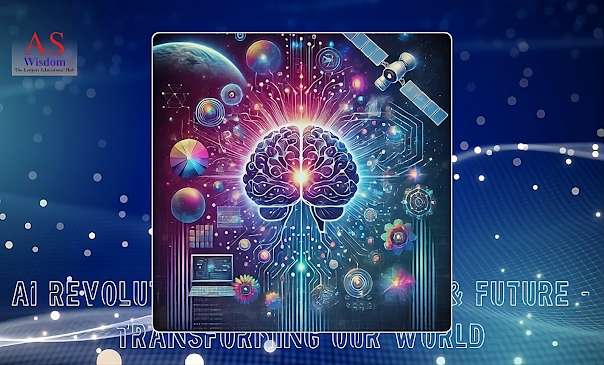
AI Revolution: Past, Present & Future - Transforming World

A futuristic and artistic poster showcasing the evolution and future of Artificial Intelligence (AI). The design features a glowing central AI brain surrounded by colorful neural network patterns, digital circuits, and depictions of technological milestones like satellites, robotic arms, and futuristic cityscapes. The vibrant gradient background of deep blue, purple, and neon hues symbolizes innovation and progress. Bold text reads 'AI Evolution: Shaping the Future,' highlighting AI's impact on space, healthcare, and technology.

The Rise of Artificial Intelligence: Development, Innovations, and Future Prospects

Artificial Intelligence (AI) has transitioned from a speculative concept in science fiction to a transformative force driving technological innovation. The 21st century has witnessed AI evolve from basic rule-based systems to sophisticated neural networks capable of autonomous decision-making. 

In this blog, we will delve into the origins of AI, its rapid advancements, and its current and future applications across sectors such as space exploration, healthcare, and technology. AI’s potential to redefine industries and its role in shaping humanity's future is unparalleled, making it a topic worth exploring in-depth.


The Genesis of Artificial Intelligence

The roots of AI trace back to ancient philosophical musings about intelligent machines. However, AI as a scientific discipline began taking shape in the mid-20th century. The term "Artificial Intelligence" was coined in 1956 at the Dartmouth Conference by computer scientist John McCarthy, alongside visionaries like Marvin Minsky and Allen Newell. This conference laid the foundation for the field, sparking interest in developing machines capable of mimicking human intelligence.

Early Beginnings (1950s-1970s)

The initial focus of AI was on problem-solving and symbolic reasoning. Researchers explored the possibility of creating systems that could simulate human reasoning. Early pioneers like Alan Turing introduced concepts like the Turing Test to assess a machine's ability to exhibit intelligent behavior. During this period, researchers developed early AI programs such as:

  • Logic Theorist (1955): Often regarded as the first artificial intelligence program, Logic Theorist was designed to prove mathematical theorems. It demonstrated that machines could mimic logical reasoning.

  • ELIZA (1964-66): ELIZA was an early natural language processing program that simulated conversation with humans. It used pattern-matching techniques to create the illusion of understanding, laying the groundwork for modern chatbots.

Despite these advancements, limitations in computing power, high costs, and a lack of significant breakthroughs led to the "AI winter," periods of reduced funding and interest in AI research.

The Renaissance of AI (1980s-2000s)

The advent of more powerful computers and the rise of machine learning (ML) techniques revitalized AI research. Expert systems, which were programs designed to mimic human expertise in specific domains, gained traction during this period. Concurrently, advancements in data storage and the internet facilitated the collection of vast datasets, enabling AI systems to learn and adapt. Key milestones included:

  • IBM Deep Blue: In 1997, IBM’s Deep Blue became the first computer to defeat a reigning world chess champion, Garry Kasparov. This event showcased the potential of AI in handling complex problem-solving tasks.

  • Support Vector Machines and Neural Networks: Researchers began exploring new algorithms for pattern recognition, enabling breakthroughs in areas like image and speech recognition.

The Golden Age of AI: 2010 Onwards

The past decade has been transformative for AI, thanks to breakthroughs in deep learning and neural networks. Deep learning, a subset of machine learning, uses algorithms inspired by the structure and function of the human brain. These systems are capable of learning from massive datasets, making them ideal for tasks such as image recognition, language translation, and game-playing.

Defining Moments in AI Development

  • 2012: AlexNet: This deep learning model achieved groundbreaking success in the ImageNet competition, significantly improving image recognition accuracy. It marked a turning point in the adoption of neural networks.

  • 2016: AlphaGo: Google DeepMind’s AlphaGo defeated the world champion in Go, a board game considered more complex than chess. This demonstrated AI’s ability to master intricate strategies.

  • 2020: GPT-3: OpenAI’s GPT-3 showcased the potential of AI in generating human-like text. Its applications in content creation, customer service, and programming opened new possibilities.

Current Applications of AI

AI’s influence extends across multiple sectors, enhancing efficiency, accuracy, and innovation. Below, we explore its most prominent applications in detail:

1. Space Exploration

AI plays a pivotal role in unraveling the mysteries of the cosmos. From optimizing spacecraft trajectories to analyzing astronomical data, AI is indispensable in modern space missions. Key achievements include:

  • NASA’s Mars Rovers: AI algorithms enable rovers like Perseverance to navigate autonomously on the Martian surface. These algorithms help avoid obstacles, identify scientific targets, and make real-time decisions without human intervention.

  • SETI (Search for Extraterrestrial Intelligence): AI processes vast amounts of radio signal data to identify patterns that could indicate the presence of alien civilizations. Machine learning helps sift through enormous datasets to find meaningful signals.

  • James Webb Space Telescope: AI assists in analyzing the massive datasets generated by this telescope, helping astronomers’ study distant galaxies and the formation of stars and planets.

2. Healthcare

AI’s integration into healthcare has revolutionized diagnostics, treatment planning, and patient care. Its ability to analyze medical data with precision and speed is unmatched. Notable advancements include:

  • Medical Imaging: AI-powered systems can identify abnormalities in X-rays, MRIs, and CT scans with high accuracy. This aids in early detection of diseases like cancer.

  • Drug Discovery: AI accelerates the process of discovering new drugs by analyzing molecular structures and predicting their interactions with biological targets. This reduces the time and cost of bringing new treatments to market.

  • Telemedicine: AI chatbots and virtual assistants provide preliminary diagnoses and mental health support, making healthcare accessible to remote areas.

3. Autonomous Vehicles

Self-driving cars, powered by AI, are transforming transportation. These vehicles rely on advanced sensors, cameras, and AI algorithms to navigate roads safely. Companies like Tesla and Waymo are at the forefront of this technology, utilizing AI for:

  • Real-time decision-making based on sensor data.
  • Enhancing safety through predictive analytics, such as anticipating pedestrian movements.
  • Reducing traffic congestion and optimizing fuel efficiency through intelligent route planning.

4. Finance

AI’s ability to analyze massive datasets in real-time has reshaped the financial sector. Applications include:

  • Fraud Detection: AI identifies unusual patterns in financial transactions, flagging potential fraud in seconds.

  • Algorithmic Trading: AI-driven algorithms execute trades at lightning speed, leveraging market trends and data.

  • Robo-Advisors: These AI-powered tools provide personalized investment advice, helping individuals manage their portfolios.

5. Climate Science

AI contributes significantly to combating climate change by providing insights and optimizing systems. Key applications include:

  • Weather Prediction: AI models analyze historical data to predict weather patterns and natural disasters with greater accuracy.

  • Renewable Energy Optimization: AI improves the efficiency of wind turbines, solar panels, and energy grids by predicting demand and optimizing supply.

  • Environmental Monitoring: Satellite imagery and AI algorithms detect deforestation, monitor carbon emissions, and track wildlife populations.

The Future of AI

AI’s future is poised to be even more transformative, with advancements expected in several groundbreaking areas:

1. Quantum AI

The integration of quantum computing and AI promises exponential leaps in processing power. Quantum AI could solve complex problems, such as protein folding in biology, that are currently beyond the reach of classical computers.

2. General Artificial Intelligence (AGI)

AGI aims to replicate human intelligence across diverse tasks, unlike narrow AI, which is task-specific. Although AGI remains theoretical, ongoing research in neuroscience and cognitive science could bring us closer to this goal within the next few decades.

3. Space Colonization

AI will be a cornerstone of humanity’s efforts to colonize other planets. It will design sustainable habitats, manage autonomous robots for construction, and assist in resource allocation and crisis management in extraterrestrial environments.

4. Healthcare Personalization

AI will enable hyper-personalized medicine, tailoring treatments based on an individual’s genetic makeup, lifestyle, and environmental factors. This could revolutionize disease prevention and management.

5. Ethical AI

As AI becomes more pervasive, ensuring its ethical development and use will be crucial. Frameworks are being established to address biases, ensure transparency, and hold AI systems accountable for their actions.


Challenges and Ethical Considerations

Despite its potential, AI poses significant challenges:

  • Bias in Algorithms: AI systems can inherit biases present in their training data, leading to unfair outcomes. Efforts are ongoing to create more inclusive datasets and algorithms.

  • Job Displacement: Automation threatens traditional employment sectors, necessitating reskilling programs to prepare the workforce for AI-driven industries.

  • Security Risks: AI’s misuse, such as in creating deepfakes or conducting cyberattacks, underscores the need for robust security measures.

Addressing these challenges requires collaboration between governments, academia, and industry leaders to create a balanced approach to AI development.


Conclusion

AI’s journey from speculative beginnings to its current status as a cornerstone of modern innovation is awe-inspiring. Its applications span across industries, transforming how we live, work, and interact with technology. From revolutionizing healthcare and space exploration to enhancing daily conveniences like personalized recommendations and smart devices, AI has integrated itself into nearly every facet of human life.

However, with great power comes significant responsibility. The ethical, social, and economic implications of AI demand careful consideration. Addressing challenges like algorithmic bias, job displacement, and security risks will require a collaborative effort among researchers, policymakers, and industry leaders. It is essential to create frameworks that prioritize transparency, fairness, and accountability in AI systems.

Looking ahead, the future of AI holds immense promise. Innovations such as quantum AI, general artificial intelligence (AGI), and hyper-personalized healthcare have the potential to reshape the world in ways we can only begin to imagine. At the same time, balancing technological advancements with ethical safeguards will ensure that AI remains a force for good.

As we stand on the brink of a new era, one thing is certain: the evolution of artificial intelligence will continue to push the boundaries of what is possible, unlocking opportunities that were once thought to exist only in the realm of science fiction. By embracing this transformative technology responsibly, humanity can harness its power to solve complex global challenges and build a brighter, more equitable future for all.